The idea, and the science that caught up to it
- Pioneered by Dr. Sarno at NYU
- Scans don't predict back pain (AJNR, 2015)
- 66% pain-free in a JAMA Psychiatry trial
You believe Sarno. So why do you still hurt?
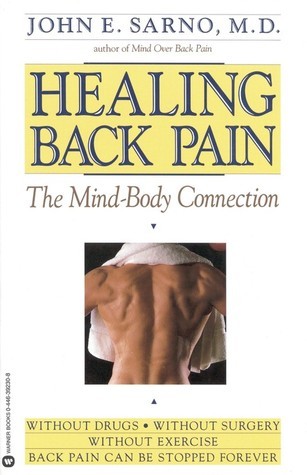
You read Healing Back Pain. Maybe twice. You believe Dr. John Sarno was onto something. The scans don't explain your pain, the timing tracks with stress, the whole thing fits. You're convinced.
And you're still in pain.
That's the part nobody warns you about, and it's not a sign you got it wrong. Sarno's big idea was that understanding the cause, what he called Tension Myositis Syndrome, would be enough to undo it. He called knowledge the penicillin. For some people it really is. For a lot of people, it isn't, and that gap is where this page lives.
Your pain is real. Neuroplastic pain doesn't mean imaginary. It means your brain learned a danger signal and kept running it. The good news in that book is true. The missing piece is what you do after you close it.
What Healing Back Pain actually says
Sarno's claim was simple and, at the time, heretical. Most chronic back pain isn't coming from your discs or your spine. It's coming from your brain, which makes real pain to pull your attention away from feelings you'd rather not face, often buried anger or pressure.
He backed it with decades of patients at NYU, and modern imaging has caught up to him. Bulging discs and degeneration show up constantly in people with no pain at all. The finding on your scan is probably not the thing hurting you.
Where the book stops short is the doing. It's roughly two hundred pages of why and a handful of pages of how. Sarno's instruction was mostly think psychological, resume normal activity, stop treating yourself as injured. For a thinker who can flip a switch on belief, that works. For most people, belief is step one of many.
96%
Disc bulges and degeneration are common in people with no back pain, and show up in 96% of pain-free 80-year-olds.
Brinjikji et al., AJNR, 2015. DOI: 10.3174/ajnr.A4173
A systematic review of 33 studies and more than 3,000 people with no pain at all. This is the modern evidence for Sarno's core claim: the finding on your scan probably isn't what's causing your pain.
A quick gut check
Does your pain move around, or flare up with stress?
See if your pain fits the patternJames47 · low back pain · 9 yearsComposite story, drawn from documented cases. Not a real named person.
James read Healing Back Pain on a friend's push and felt the floor shift. Clear scans, pain that spiked the week his father got sick, the perfectionism Sarno described almost word for word. He believed it completely. He told everyone.
And the pain didn't leave. He read it again, sure he'd missed something. He hadn't. He understood it cold. What he didn't have was a way to turn understanding into the daily work of teaching his brain it was safe. He'd taken the penicillin, as Sarno put it, and the infection stayed. The book was right about the cause. It just left him at the trailhead with no map for the walk.
Composite story based on common patient experiences. Not a specific individual.
What to actually do after you read Sarno
Here's a short version of the work the book points at but doesn't drill. Try it for two minutes. One round won't move much. Done daily for weeks, this is how understanding turns into change.
Two minutes, where you are
A two-minute Sarno-style practice
Don't take our word for it. This is one rep of the practice the book describes, with a quick read before and after, so you feel what it does. It's gentle, and you can stop anytime.
- 1Notice the pain without fear. Remind yourself, like Sarno did with his patients: the scans are clear, this is a safe signal, not damage.
- 2Look underneath it. Sarno's whole point. What have you been carrying lately? Anger, pressure, worry you've been pushing down? Don't fix it. Just name it.
- 3Resume something you've been avoiding, gently. Sarno told people to stop acting injured. Pick one small thing and do it without bracing.
- 4Notice you're still safe. Nothing broke. That's the message your brain needs, over and over, until the alarm believes it.
You're further along than you think
- Understand itYou read the book
- Feel itOne rep, done above
- Practice dailyWhere most people stall
- RecoverThe pattern fades
Why understanding it often isn't enough
Sarno believed insight was the lever. Realize the pain is emotional, and the brain has no more reason to make it. For the people in his office who lit up the moment he explained it, that held.
But belief and practice are different muscles. You can fully accept that your pain is a learned brain pattern and still have a brain that runs the pattern out of sheer habit. Knowing you're safe and feeling safe, in your body, on a Tuesday afternoon when your back seizes up, are not the same thing. One is a thought. The other is a skill you build with reps.
That's not a flaw in you. It's the gap between a book that ends and a pattern that doesn't.
| What matters | Healing Back Pain on its own |  Healing Back Pain + PainAppYour next step Healing Back Pain + PainAppYour next step |
|---|---|---|
| The insight | Excellent. The idea that changed the field. | The same idea, carried into daily reps. |
| The how-to | A few pages. Mostly think psychological. | A practice that walks you through the doing. |
| When belief isn't enough | No next step in the book. | Turns understanding into trained safety. |
| When pain flares | No plan for the bad days. | A flare plan, ready the moment you need it. |
| Sticking with it | Up to you, alone. | A gentle daily nudge, so it doesn't fade. |
| Your pain coach | The page can't answer back. | A Pain Coach answers your questions, day or night. |
| Pain tracking | No way to tell if it's helping. | Pain tracking, with tailored feedback. |
| Kept up to date | Frozen at publication. | The latest pain neuroscience education, updated as the research moves. |
Healing Back Pain + PainApp
Your next step
The insight
Healing Back Pain on its own: Excellent. The idea that changed the field.
PainApp: The same idea, carried into daily reps.
The how-to
Healing Back Pain on its own: A few pages. Mostly think psychological.
PainApp: A practice that walks you through the doing.
When belief isn't enough
Healing Back Pain on its own: No next step in the book.
PainApp: Turns understanding into trained safety.
When pain flares
Healing Back Pain on its own: No plan for the bad days.
PainApp: A flare plan, ready the moment you need it.
Sticking with it
Healing Back Pain on its own: Up to you, alone.
PainApp: A gentle daily nudge, so it doesn't fade.
Your pain coach
Healing Back Pain on its own: The page can't answer back.
PainApp: A Pain Coach answers your questions, day or night.
Pain tracking
Healing Back Pain on its own: No way to tell if it's helping.
PainApp: Pain tracking, with tailored feedback.
Kept up to date
Healing Back Pain on its own: Frozen at publication.
PainApp: The latest pain neuroscience education, updated as the research moves.
A 2-minute check. Start there.
Is reading the book enough on its own?
For some people, truly, yes. If you're one of them, wonderful, you may not need anything else.
For everyone who believes it and still hurts, the missing piece is turning the insight into a daily habit your nervous system can actually learn from. That's what we built PainApp to do. The Pain Coach answers the questions Sarno's book can't, the ones that come up when a flare hits and the theory feels far away. The guided practice gives you the daily reps the book only gestures at. The pain tracker watches for the patterns shifting, so you can see understanding becoming change.
Same insight as the book. It just doesn't leave you at the trailhead.
Real people, real recoveries
Could your pain be neuroplastic?
Your pain is real. Take a free 2-minute test to understand your pain patterns and explore your next step.
Take the free pain testSee your result straight away.
A note on the person behind the book
John E. Sarno, MD
Dr. John Sarno was a professor of rehabilitation medicine at NYU and worked for decades at the Rusk Institute, where he treated thousands of patients with chronic pain. He proposed that most chronic back pain comes from the brain, not the spine, and named it Tension Myositis Syndrome. He died in 2017, the day before his 94th birthday. We cover his life and work in full on our Dr. Sarno page.
We are not affiliated with Dr. Sarno or his estate. We point to his work because it started the field and the science has since backed his core claim.
Could your pain be neuroplastic?
Your pain is real. Take a free 2-minute test to understand your pain patterns and explore your next step.
Take the free pain testSee your result straight away.
Already read the book and ready to go?
Or just start the app
Believe the book and ready to do the work? You can skip ahead. PainApp is on iPhone and Android.


Founder, PainApp
Researching neuroplastic pain science and recovery methods for 3+ years.
Frequently Asked Questions
Because believing the cause and retraining the pattern are different things. Sarno hoped understanding alone would be enough, and for some people it is. For most, the insight is step one. The pain stays until the brain learns safety through steady practice, which the book doesn't really provide.
Yes. It's the book that started the whole field, and modern imaging has backed its core claim that scan findings often don't cause pain. Just know going in that it's heavy on the why and light on the day-to-day how.
Sarno called knowledge the penicillin, and for some people understanding really does unlock recovery. For many others it's necessary but not sufficient. You also have to practice teaching your nervous system that the pain is safe, day after day.
Many people credit his books with major relief, and the approach that grew out of his ideas now has real trial evidence. But plenty of readers get partial relief and stall, usually at the point where insight needs to become daily practice.
This page is about the specific gap in Sarno's book, that understanding alone often isn't enough. If you've tried the broader TMS approach from any source and stalled, we cover that separately on our TMS not working page.
No. Keep working with your clinician, especially to rule out anything structural first. This approach sits alongside medical care, not instead of it.
Keep reading
Tension Myositis Syndrome (TMS)
Sarno's framework, in plain language.
Who Was Dr. John Sarno
The doctor who started the field.
TMS Not Working?
Why the TMS approach stalls, and what to try next.
Back Pain and the Brain
Why chronic back pain so often isn't structural.
Neuroplastic Pain: Symptoms and Causes
The modern name for what Sarno described.
How Marcus Recovered From Back Pain
A recovery story that matches the method.
Pain Free You (Buglio)
Belief into practice: teaching the brain it's safe, day to day.
References
- Brinjikji W, et al. Systematic Literature Review of Imaging Features of Spinal Degeneration in Asymptomatic Populations. AJNR Am J Neuroradiol, 2015;36(4):811-816. PubMed
- Ashar YK, Gordon A, Schubiner H, et al. Effect of Pain Reprocessing Therapy vs Placebo and Usual Care for Patients With Chronic Back Pain. JAMA Psychiatry, 2022;79(1):13-23. PubMed
Medical Disclaimer: This content is for informational purposes only and does not constitute medical advice, diagnosis, or treatment. Always consult with a qualified healthcare provider about your specific condition. Pain is real regardless of its source. Neuroplastic pain is a legitimate medical phenomenon, not a suggestion that pain is imaginary. If you are in crisis, contact FindAHelpline.com for immediate support.