The Neuroscience-Based Pain Management App

A pain management app that treats the root cause of chronic pain.

Painapp is a chronic pain management app built on pain neuroscience and Pain Reprocessing Therapy. It helps you understand, retrain, and calm your nervous system. Your pain is real. And it can change.
You've tried everything. Nothing stuck. That isn't your fault.

Most apps for chronic pain hand you a meditation timer and call it a day. Painapp is different. It's a full chronic pain management app built around pain reprocessing therapy, neuroscience education, and nervous system retraining.

You'll finally understand why your pain won't quit. And what to do about it.

Why Painapp feels different

We don't manage symptoms. We target the learned neural pathways keeping you in pain.

Rooted in real science

Built around published research on neuroplastic pain, central sensitization, and predictive processing. Not generic wellness content.

Personalized approach

Back pain, neck pain, migraines, fibromyalgia, IBS. The app adapts directly to what you actually feel and your recovery stage.

Support in your pocket

An AI pain coach, audio lessons, somatic exercises, and a smart pain tracker. All seamlessly integrated into one app.

Everything you need,
working together.

Four core tools designed to help you calm the signal and reclaim your life.
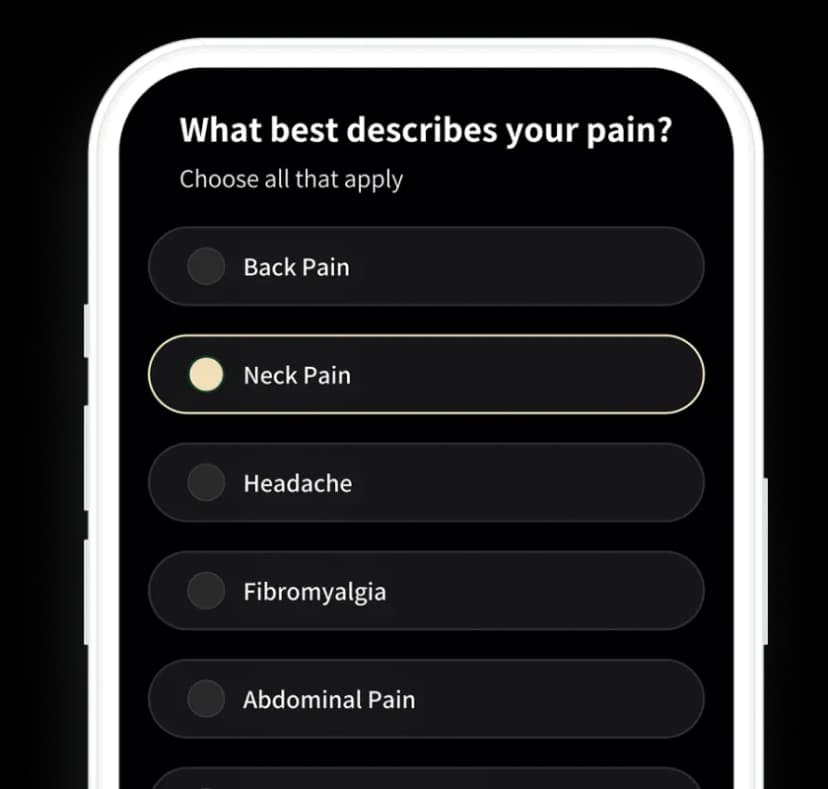
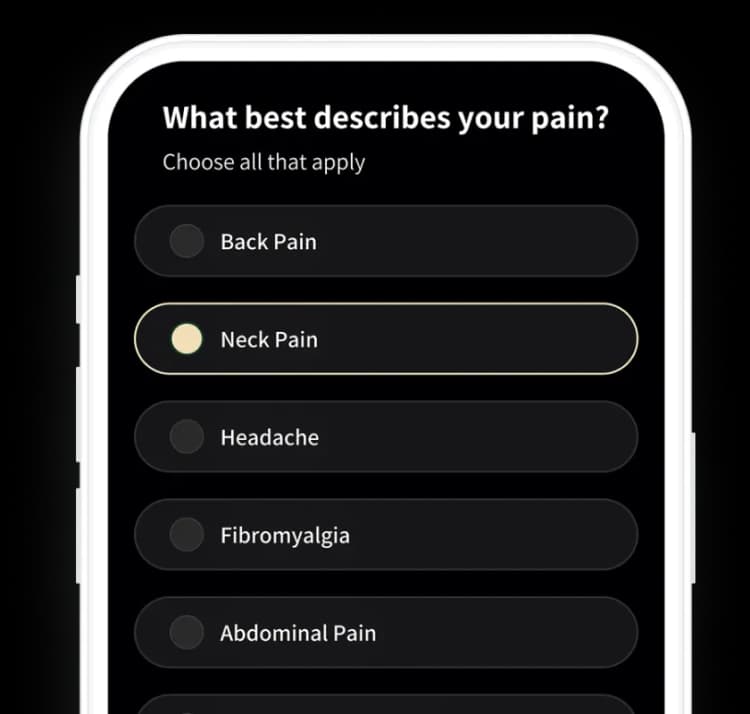
Painapp intake screen asking what best describes your pain
STEP 1

Built around your pain, not a generic template

Back pain. Neck pain. Headaches. Fibromyalgia. Abdominal pain. The app asks what you feel, when it started, and what's already failed. From there, Painapp matches you with a recovery path tailored exactly to you.
  • Pain type, location, and history in minutes
  • Conviction assessment so we meet you where you are
  • Recommendations update as your pain shifts
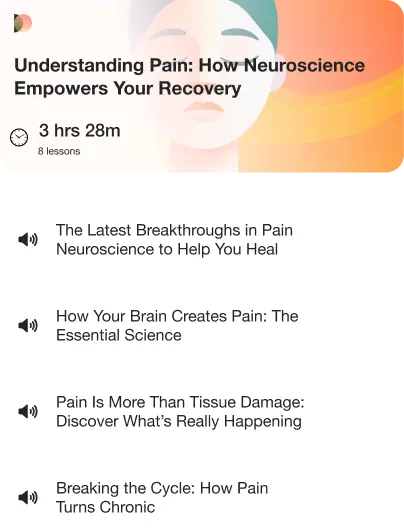
Painapp audio course on pain neuroscience
STEP 2

Audio courses in real pain neuroscience

Research shows that simply understanding how chronic pain works can reduce pain intensity on its own. We turn that research into short, listenable lessons you can play on a walk, in the car, or in bed.
  • 'How Your Brain Creates Pain' and much more
  • 8-lesson flagship course, 3h 28m total content
  • Audio first so you can rest your eyes and body
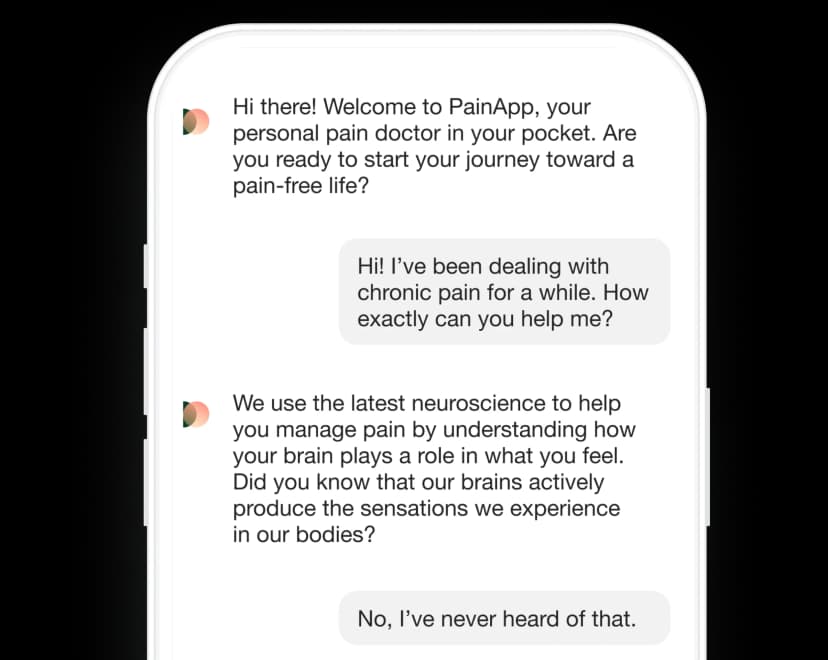
Painapp AI pain coach chat screen
STEP 3

A pain coach in your pocket, 24/7

Flare-ups don't check the clock. Neither does Painapp's AI pain coach. Talk through a fear that's winding your nervous system up, or get a somatic exercise for the next 10 minutes.

  • On-demand support during late-night flare-ups
  • Context-aware answers customized to your condition
  • Always complements your doctor, never replaces them
Painapp pain tracker showing a level 4 out of 7 pain log
STEP 4

F.I.T. pain tracking that finds the pattern

Most pain tracking apps just log numbers. Our F.I.T. tracker pairs your pain data with what you were thinking, feeling, and doing. Over time, you see the pattern. And the pattern is what you break.

  • One-tap logging without tedious long forms
  • Personalized safety messages when pain spikes
  • Clear trend reports to share with your clinician

The clinical science behind the app

Here's something strange.

A paper cut hurts. But three months later, there's no paper cut and no pain. The system worked.

Now think about your pain. Three months in. Six months. Two years. Scans come back clean. The injury, if there ever was one, should be long healed. But the pain is still there.

Your nervous system learned it.

Pain is a signal your brain generates to keep you safe. Most of the time, that signal turns off when the threat is gone. But sometimes it doesn't.

The brain keeps firing the alarm long after the danger passed. Scientists call this central sensitization. It's why your pain can move around, flare with stress, or hurt more than any MRI can explain.

What the brain learns, it can unlearn.

That's what Painapp teaches. The exact same process researchers have been studying for decades.

Pain Reprocessing Therapy
Emotional Awareness and Expressive Therapy
Pain Neuroscience Education

Different names for the same idea: your brain built this, and your brain can take it apart.

Painapp puts that process on your phone.

Painapp doesn't diagnose or replace medical care. Always work with your clinician.

Is Painapp for you?

Honest answers, both directions.

Painapp is likely a fit if...

  • Your pain has lasted more than 3 months
  • Scans look clean, or the findings don't match how much it hurts
  • You've tried PT, medication, injections, or surgery and the relief didn't last
  • Your pain shifts, spreads, or flares with stress
  • Pain feels worse on hard days and quieter on good ones
  • You've been told to "just live with it" and you're not ready to accept that

Painapp probably isn't the right tool if...

  • Your pain started in the last few weeks from a clear injury that's still healing
  • You have a red-flag condition like cancer, infection, or a fracture
  • You're in the first weeks after surgery
  • You're having new neurological symptoms (loss of bladder control, sudden weakness, numbness that's spreading)

See your doctor first Painapp is built for pain that's outlived the original cause, not for pain that still has one.

Frequently Asked

Questions people actually ask us

Real answers about how this pain management app works, what it treats, and what the science actually says.

Both, and that matters. Most pain management apps help you track pain, rate it, log flares, and cope. Painapp does something most pain management apps don't. It helps you find out whether your chronic pain is being generated by a stuck nervous system, and if it is, it teaches you how to calm it down. So yes, it's a pain management app. It's also the one built around the science of reducing and eliminating pain, not just living with it.

Most chronic pain apps are trackers. You log your pain, they draw you a chart. Useful, but it doesn't change the pain.

Painapp is built on pain neuroscience. The research shows that chronic pain isn't always a tissue problem. Often it's a learning problem. Your brain has learned to generate a danger signal that no longer matches what's happening in your body, a process researchers call central sensitization. Once you understand how that loop gets built, you can start unbuilding it.

The tracking is still there. It just asks different questions. Questions designed to show you the patterns that reveal whether your brain is generating the pain signal, not your body.

Painapp is an app for chronic pain that's lasted more than three months, when scans look clean or findings don't match how much it hurts. It's built for people with back pain, neck pain, fibromyalgia, migraines, IBS, pelvic pain, TMJ, sciatica, RSI, and other conditions where structural treatment hasn't worked. If your pain moves around, flares with stress, or feels worse on hard days and quieter on good ones, this is probably for you.
Real treatment. The science behind Painapp is taught at the University of Colorado Boulder, Harvard, and used in clinical practice by pain specialists. Pain Reprocessing Therapy, Emotional Awareness and Expressive Therapy, and Pain Neuroscience Education all have peer-reviewed evidence. Painapp packages the same principles into an app you can use from your phone. It doesn't replace your doctor. It gives you the piece of the puzzle most doctors don't have time to explain.
Ten minutes a day, mostly. You take a starting assessment to see which neuroplastic pain patterns fit you. You get audio lessons that teach you why your brain is generating pain. You track flares using the F.I.T. method, which looks for patterns that prove the pain is neuroplastic. You talk to the AI pain coach when something flares at 2am and you need someone who understands. That's it. No yoga videos. No generic meditations.
There's a free trial so you can see if the approach fits before you pay. After that, it's $29.99 per quarter. That works out to about ten dollars a month. For context, one physical therapy session costs more than that, and a pain clinic program can run forty thousand dollars.
It's designed for conditions where the pain is driven or amplified by a sensitized nervous system. That covers a lot of ground. Back pain, fibromyalgia, IBS, migraines, TMJ, pelvic pain, sciatica, plantar fasciitis, chronic neck pain, CRPS, RSI, tinnitus, and dizziness from PPPD. Each has its own evidence base inside the app. If your pain came from a clear structural injury that hasn't healed yet, or you have a red-flag condition like cancer or a fracture, this isn't the right tool.
Yes. Painapp isn't anti-medication. Many people use the app while tapering with their doctor, and many keep taking what they need while they learn. The app doesn't ask you to stop anything. It works alongside whatever your medical team has you on.
No, and this matters. Your pain is real. You're not making it up. Neuroplastic pain means the pain is being generated by your brain and nervous system rather than by active tissue damage. That's a biological process, not a psychological one. The pain hurts exactly as much as any other pain. The difference is that it's coming from a faulty signal, and signals can be retrained.
It varies. Some people feel shifts in the first two weeks once they understand what's happening. Others need a few months. The JAMA Psychiatry study used a four-week protocol. Recovery is usually not linear. Pain goes down, then spikes, then goes down further. The app is built around that reality, not a promise that you'll be pain-free by Friday.
Painapp was built by people who've been through this. It's grounded in the work of Dr. Alan Gordon (author of The Way Out), Dr. Howard Schubiner, Dr. Lorimer Moseley, and the late Dr. John Sarno. The science comes from labs at Colorado Boulder, Harvard, and teams publishing in JAMA, PAIN, and Nature Neuroscience. We cite everything.
TU

Written and reviewed by

Tauri Urbanik · Pain Science Researcher, Painapp

I've spent three-plus years reading the research on neuroplastic pain and translating it into things people can actually use. Every study cited on this page is linked or named so you can check it. Reviewed for clinical accuracy by the Painapp clinical team. Last updated April 17, 2026.

Medical disclaimer

Painapp is for education and self-management. It doesn't diagnose, cure, or replace medical care. Always work with your clinician, especially for new pain, worsening symptoms, or red-flag conditions (fever, numbness, loss of function, unexplained weight loss, history of cancer). If you're in crisis, contact your local emergency service or a crisis line.


Your recovery path starts today.

You've been told your pain is forever. It isn't. See what a chronic pain app built on real neuroscience can do for you.

Download on the App StoreGet it on Google Play

Painapp is for informational and educational use. It doesn't replace medical care from your clinician.